

Countless customers come to us desperate for advice about floor moisture in older homes with concrete slabs.
We had a customer whose house was built in 1979. They had bought the house 5 years prior and had ripped out all the flooring and they had moved walls and etc. Under the carpet in a back bedroom they found black patches (mold), a bit of discolorization on the baseboards and some of the wood floors had a bit of buckle. So they hired a company (not us) to come and treat for the mold and their new flooring was installed with a premium underlayment that would keep any moisture from warping the new wood flooring.
No one told them that the moisture and mold would still develop under the premium underlayment..and no one told them that moisture will always seek the path of least resistance. This means that if it can’t get through the underlayment it will find another way, so if your entire floor is covered in plastic the next driest place for it to go is to seep into the sheetrock and the studs in the walls, this means you did not treat the floor, it means you just redirected the moisture.
Skip ahead 5 years and they had a water leak requiring them to tear out a section of sheetrock which revealed rotting 2×4 studs and a major structural problem that was ultimately discovered throughout the house.
When they referred back to the paperwork the original homeowner had innocently left for them there was a warranty that came with the flooring. The homeowner called the company that had installed the carpet and wood floors and learned that the original homeowner KNEW about the moisture and did not disclose it in the sellers disclosure. The warranty was no longer effective.
A lawyer was hired and they won the case. The original homeowner had to pay for all the repairs and other tacked on charges. Multiple attempts to get insurance or home warranty to pay failed. It is an ugly outcome for everyone involved. No one wants to have to deal with that.
All this to say, if your new place is older than 1984 it would not hurt to have it tested before you install all new flooring. The test results are only good for the time frame in which it was tested. If the temperature and humidity change or we get a lot of rain or draught you will likely get a dramatically different reading. Four to six pounds of vapor transmission in an average 24 hour window is normal. Six to ten pounds is generally treatable but anything over 10 pounds is a gamble, it might work, it might not. If anyone tells you different, they haven’t been in business long enough.
We have had dozens of experts from the nations top manufacturers of moisture vapor retardants tell us their product will fix the problem. This is not a lie, it will fix the problem in the areas where it is applied, as long as the problem doesn’t get worse. It will be effective under stable atmospheric conditions. The thing that not one of the experts have ever told us is that by treating the wide open spaces in your home, unless you also treat under the walls, you still have a problem. When you sell your house, you will have to disclose it.
Have no fear, there are still options and Slip Free Systems can help you navigate the best option for you.
Read more here: Solid Advice About Floor Moisture Remediation
Or, dont take our word for it and check this out: Moisture Wicking Up an Old Concrete Slab? | HomeSymptom
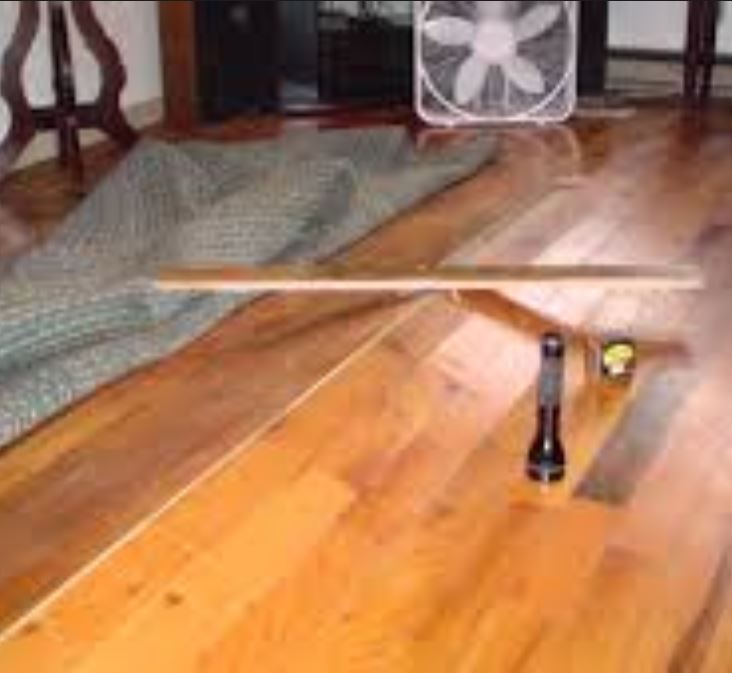
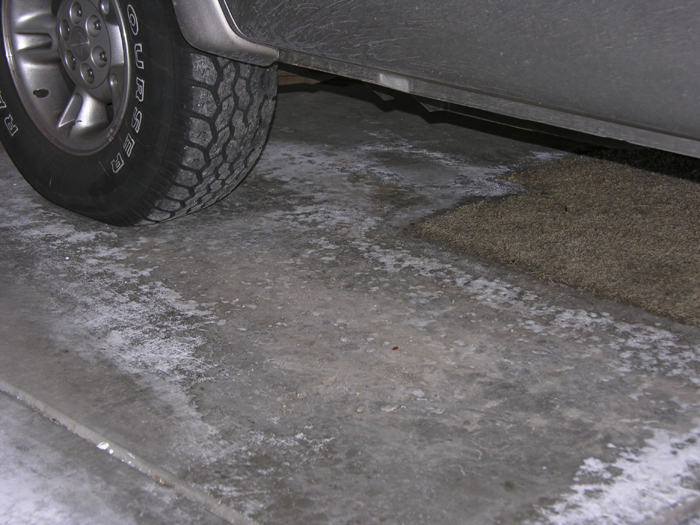
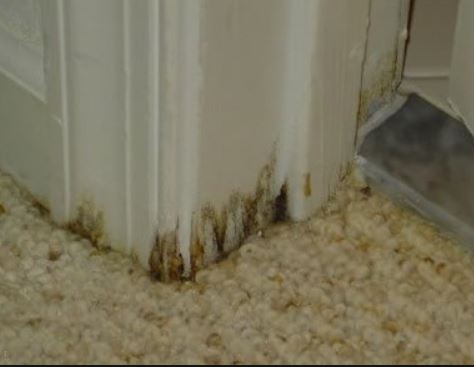
You will notice in the images below, each instance of slab moisture has created a different scenario to reveal the problem. In the first image the wood floor is buckling from the abundance of moisture below it. In the second image, those white puffy clouds on the floor are evidence of where moisture vapor rose up through the slab bringing minerals and salts with it leaving behind this tell tale sign of a moisture problem in the slab. In the third image the moisture coming up from the slab has soaked the studs and sheetrock and turned into a mold problem. If you see any of these red flags, seek remediation and treat the issue before it becomes catastrophic.
In the below video you will see actual footage from one of our customers houses where we found studs inside their walls that were so wet, we could literally reach in and pull out the spongy mess with just our fingers. This customer ended up having a contractor come in during Covid and tear out every wall in their house, one at a time, and treating the floor for moisture and then methodically replacing each wall till the entire house was done. Insurance did not pay for it. Naturally, insurance has a clause for that. All that to say, bear these thing in mind when purchasing an older home.